Starlink installation
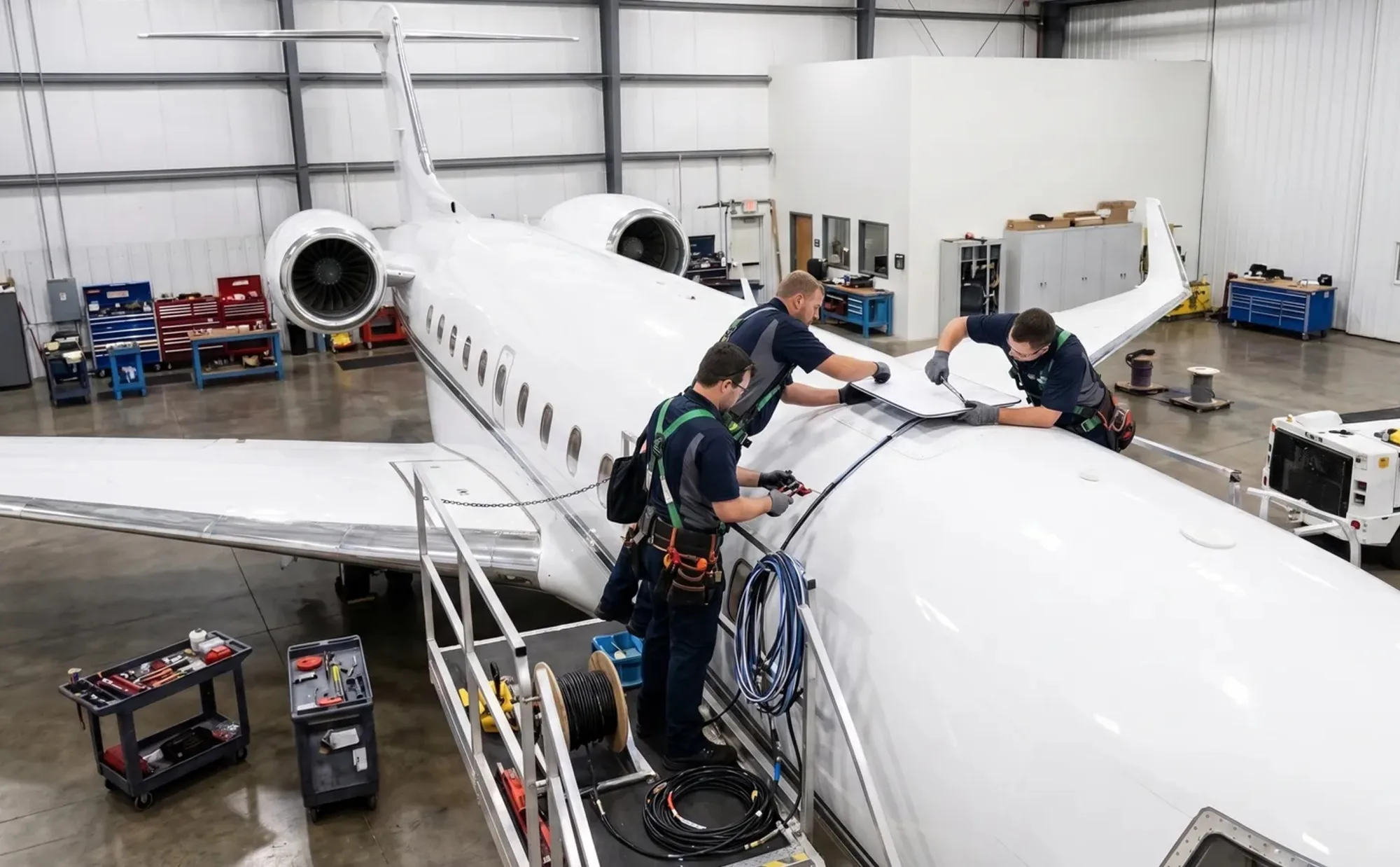
No two shops quote a Starlink install the same way. Tell us your aircraft and what you want, and we bring back competing quotes on price, downtime, and the first open hangar slot.
Everyone wants it. Nobody can tell you what it costs.
Connectivity used to be a slow, predictable decision. Starlink turned it into a rush, and the supply side has not settled. Ask three shops the same question in the same week and you will get three genuinely different answers, for reasons that have nothing to do with anyone being unfair.
- Approved installation paths differ by airframe, and the list keeps moving
- Hangar capacity, not hardware, is usually what sets your date
- No two quotes scope the job the same way, so the totals are not comparable
- What happens to your existing satcom can swing the number badly
That is exactly the condition where a single quote tells you almost nothing, and three quotes on an identical scope tell you everything.
Read: the August repricing and the Viasat cutoff →From your aircraft to comparable quotes
Tell us the aircraft
Make, model, serial or tail, what connectivity is on it today, and what you want the cabin to do.
We confirm the path
Our team checks the current approved installation route for your type and flags anything that affects scope or schedule.
One scope, several shops
The identical scope goes to qualified installers so the numbers coming back describe the same job.
You compare and choose
Price, downtime, slot date, and what is included, on one page. You pick, and you deal directly with the shop.

Streaming speed at 45,000 feet
Starlink put real broadband in the cabin. Calls hold for the whole leg, weather and charts load in seconds, and passengers work or stream the way they do on the ground. The technology is settled. Getting it installed at a fair price is the part that is not.
- Calls that hold from wheels up to wheels down
- Enough bandwidth for the whole cabin at once
- Live weather for the crew, not a compressed snapshot
Six things that move the number
Two quotes for the same aircraft can differ by a wide margin and both be honest. These are the places the difference usually hides.
The approval path
Your aircraft needs an approved way to carry the installation, and which route applies depends on the airframe and who holds what. It affects cost, lead time, and sometimes whether a shop can take the job at all.
Downtime, not just days quoted
A shorter posted turn time is worth nothing if the slot is months out. The number that matters is when the aircraft comes back to you, and that is a combination of both.
What happens to the old system
Removing legacy satcom, leaving it installed, or keeping it as a backup are three different jobs at three different prices, and removed equipment sometimes carries residual value worth recovering.
Everything behind the panel
Structural provisions, wiring runs, power, cooling, and where the equipment lives are the real labor. Shops scope this differently depending on what they have done on your type before.
Hardware and service handling
Who supplies the equipment, how the service plan is set up, and whether either is marked up should be visible in the quote. When it is not, that is the first question to ask.
Warranty, support, and getting there
Workmanship warranty, who you call when something misbehaves at altitude, and the cost of positioning the aircraft to a shop that is not local. Small lines that decide the real total.
Before you commit to anyone
Starlink doubled its price and Viasat is shutting off Ku
Two deadlines land in the same quarter. What changed, what it costs, and how to run your own numbers before you decide.
Read the article →Industry InsightsStarlink, Gogo Galileo, and Viasat JetXP compared
Orbit, antenna architecture, and who owns what. The four things that decide your cabin experience, none of which is peak speed.
Read the article →MaintenanceWhat an installation quote should contain
Eleven line items, why two honest quotes differ so widely, and the ten questions that make them comparable.
Read the article →MaintenanceInstall it during the inspection
Ten to twenty-five days of downtime, or almost none of it, depending entirely on when you schedule it against your due list.
Read the article →The cheapest downtime is downtime you already planned.
If an inspection is coming due in the next few months, the smartest Starlink installation is usually the one that happens while the aircraft is already opened up and out of service. One induction, one ferry, one gap in your schedule instead of two.
Tell us what is on your due list and we will scope both together, then bid them as one package. Shops price that differently than a standalone install, and usually in your favor.

A decision you can actually defend
Quotes on one scope
Every shop pricing the same defined job, so the totals mean something when you put them next to each other.
Real dates, not estimates
The slot each shop can actually give you, so the schedule conversation happens before you commit instead of after.
Shops that check out
Certificate, insurance, and a live contact verified before anyone gets your aircraft on their schedule.
Virtual Hangar is not a repair station and does not perform installations. We scope the work, run the competition, and coordinate the event. The shop you choose does the work and holds the approval.
Starlink installation, frequently asked
Can Starlink be installed on my aircraft?
It depends on the airframe and on which approved installation paths exist for it at the time you ask. That list has grown steadily and continues to change, which is why we confirm the current route for your specific make, model, and serial rather than working from a list that was accurate last quarter. Tell us the aircraft and we will come back with where it stands.
What does a Starlink installation cost?
There is no single answer, and anyone quoting you one without seeing your aircraft is guessing. The total moves with the airframe, the approval route, what happens to your existing satcom, how much wiring and structural work is involved, and which shop is doing it. That spread is the entire reason to price it competitively instead of accepting the first number.
How long will my aircraft be down?
Two separate numbers matter and they often work against each other: how long the shop needs the aircraft, and how soon the shop can start. A quick turn that cannot begin for two months may put you back in service later than a longer job starting next week. Every quote we bring back states both.
Do I have to remove my existing satcom?
Not necessarily, and it is worth deciding deliberately rather than by default. Some operators keep the legacy system as a backup, some remove it for weight and monthly cost, and removed equipment occasionally carries resale value. Each choice changes the scope and the price, so we ask before the quotes go out.
Can the installation happen during a scheduled inspection?
Often yes, and it is usually the cheapest way to do it. If the aircraft is already down and opened up, you avoid a second induction and a second gap in your schedule. Send us your due list with the request and we will scope and bid them together.
Do you install it yourselves?
No. Virtual Hangar is not a repair station. We define the scope, put it in front of qualified shops, compare what comes back, and coordinate the event. The installation is performed by the certificated facility you select, and your agreement is with them.
What does it cost to have you run the comparison?
Nothing to get the quotes and the comparison. If you move forward with an installation, our fee is agreed and itemized in advance. It is never buried inside the shop's number, and you always see what the shop quoted.
I already have a quote. Is it too late?
No, and that is a good place to start. Send it over. We will read it line by line, tell you what is firm and what is soft, and put the same scope in front of other qualified shops. If it comes back competitive, you sign it with confidence instead of hope.
Find out what your Starlink installation should cost
Send us the aircraft and what you want. We will confirm the path, bid it out, and bring back quotes you can actually compare.